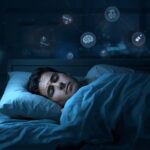
You finish a late shift or finally close your laptop after a long night, feeling wired but exhausted. You know you should sleep, but your mind is racing and your body feels out of sync. You might blame stress, but the real culprit is far more precise. It’s a fundamental mismatch between your ancient biology and the modern world, a conflict that wages war on your health every single day. This is the silent epidemic of Blue Light, Shift Work & Circadian Damage.
For millions, the problem isn’t just poor sleep it’s a chronically misaligned internal clock. Whether you’re a nurse working nights, a software developer coding past midnight, or simply scrolling in bed, you are bombarding your brain with a powerful biological signal: daytime. This signal, primarily from blue light exposure at night and irregular schedules, suppresses melatonin, disrupts hormone cycles, and confuses every organ in your body. The consequences are profound: metabolic chaos, compromised immunity, accelerated aging, and a relentless feeling of being “off.” While you might focus on other health goals, like optimizing your gut microbiome, fermented foods & aging protocol, this unresolved circadian chaos undermines your efforts at a foundational level.
This guide is your master plan to understand and conquer this modern health crisis. We will decode the science of circadian disruption, provide a actionable framework for shift workers and screen users alike, and introduce the precise tools and technologies that can repair your rhythm, protect your health, and restore your energy.
Key Takeaways:
Chronic circadian disruption from blue light and shift work is a severe physiological stressor linked to increased risks for metabolic disease, heart conditions, and mental health issues.
The key to mitigation is strategic light management: blocking blue light at night and seeking bright light at specific times to forcefully reset your clock.
Melatonin supplementation is a critical tool for shift workers, not just for sleep, but for providing a necessary “darkness signal” to misaligned organs.
Your diet and meal timing are powerful circadian levers; eating at night during shift work is uniquely damaging to metabolic health.
A combination of behavioral protocols, targeted supplementation, and sleep technology can create a “portable circadian oasis,” allowing you to thrive against the odds.
Part 1: Understanding the Need – Your Body Isn’t Broken, It’s Misled
Your circadian rhythm is a 24-hour master clock located in your brain’s suprachiasmatic nucleus (SCN). It doesn’t just govern sleep; it orchestrates the daily rhythm of nearly every physiological process—hormone release (cortisol, melatonin), body temperature, digestion, immune function, and cellular repair. This clock is set primarily by light, the most powerful zeitgeber (time-giver).
Here lies the core conflict. For shift workers and night-time screen users, light exposure is inverted. The blue light wavelength (especially around 460-480nm) is prevalent in LEDs, phone screens, and tablets. It is uniquely detected by intrinsically photosensitive retinal ganglion cells (ipRGCs) in your eyes, which send a direct “WAKE UP” signal to the SCN, brutally suppressing melatonin production Gooley et al., 2011. When you do this consistently, you aren’t just losing sleep; you are forcing your pancreas to be active at night, your liver to process food at the wrong time, and your brain’s cleanup crew to miss its shift.
The health statistics are alarming. The World Health Organization has classified shift work as a probable carcinogen due to circadian disruption. Shift workers have a documented 25-40% higher risk of depression, a 50%+ increased risk of metabolic syndrome, and a significantly higher incidence of cardiovascular events Kecklund & Axelsson, 2016. This isn’t about willpower; it’s about biology. The constant state of internal jet lag creates systemic inflammation, oxidative stress, and hormonal imbalances that diet and exercise alone cannot fully correct. This inflammatory state also directly impacts your gut microbiome, where circadian rhythms regulate microbial activity; disruption can harm gut barrier integrity, undermining the benefits of even the best fermented foods and accelerating systemic aging.
Part 2: The Solution Framework – Building Your Circadian Defense Plan
Fixing circadian damage requires a proactive, multi-layered strategy. You must become the authoritative timekeeper for your biology.
Phase 1: Master Strategic Light Exposure
Light is the problem and the solution. You must weaponize it.
For Night Shifts (The Critical Reset):
During Shift: Use bright, blue-enriched light boxes (circadian lamps) to promote alertness and signal “daytime” to your brain. This sounds counterintuitive, but it helps you stay alert and allows you to create a clearer day/night distinction.
The Morning After: This is the most important step. Wear blue-blocking glasses (amber or red-tinted) for the entire commute home. This prevents the morning sun from solidifying your “night shift” as your new day. Once home, prioritize absolute darkness for sleep.
Before Day Sleep: Use blackout curtains, a sleep mask, and ensure no light leaks. Your bedroom should be a light-proof cave.
For Evening Screen Users:
The 90-Minute Rule: Implement a mandatory “blue light sunset” 90 minutes before target bedtime. Use device night modes, but better yet, switch to non-screen activities.
Ambient Lighting: Replace bright white/blue LEDs in your home with warm, dim, amber bulbs after sunset.
Morning Anchor: Get at least 10 minutes of bright outdoor light within 30-60 minutes of waking (or your biological morning) to firmly set your clock.
Phase 2: Leverage Chrononutrition (Time-Restricted Eating)
When you eat is a powerful circadian signal for your liver and gut. Eating at night during a shift is one of the most damaging practices.
The Shift Work Protocol: If working nights, try to eat your main meal before your shift (e.g., at 6 PM), have a light snack during your “lunch” break, and avoid eating a large meal after your shift before sleeping. Confining eating to a 10-12 hour window, even on an odd schedule, is protective.
The Anchor Meal: Have a consistent, protein-rich breakfast (or your first meal after waking) at the same time every day, even on days off, to provide a stable metabolic cue.
Phase 3: Deploy Targeted Supplementation
Supplements are not a crutch but a tactical tool to compensate for a misaligned world.
Melatonin (The Darkness Pill): For shift workers, taking 0.5-3 mg of melatonin 30 minutes before your daytime sleep is crucial. It doesn’t just induce sleepiness; it provides the “darkness signal” your body is missing, helping to realign peripheral organ clocks.
Caffeine Timing: Use caffeine strategically at the start of a night shift, but never in the last 4-5 hours before your planned sleep. Its long half-life will sabotage sleep quality.
Adaptogens & Micronutrients: Consider supplements like Magnesium Glycinate (to support nervous system relaxation for sleep) and Rhodiola Rosea (to support resilience to the stress of shift work), always under professional guidance.
Part 3: Product Comparisons & Recommendations
Building your defense requires the right gear. Here’s a breakdown of products designed specifically to combat blue light and shift work challenges.
Circadian Defense Technology Comparison
Product Category How It Mitigates Circadian Damage HealthTokk Insight & Recommendation Path
Medical-Grade Blue Light Blocking Glasses Features lenses that filter >99% of disruptive blue/green light (up to 550nm), providing the strongest protection for night shift workers during morning commutes. The single most effective tool for shift workers. Compare high-fidelity glasses with verified spectral data for maximum circadian protection.
Circadian Reset Light Therapy Lamps Emits intense, blue-enriched light (10,000 lux) to promote alertness during night shifts or morning grogginess, actively resetting the master clock. For proactively setting your rhythm. Discover bright light therapy devices with appropriate intensity and UV-free safety.
Biomimetic Smart Lighting for Home Automatically adjusts color temperature throughout the day (bright blue-white by day, warm amber by night), creating a circadian-supportive home environment. Foundational for daily rhythm hygiene. Explore smart lighting systems that automate natural light cycles in your living space.
Advanced Wearable Sleep Trackers Uses actigraphy and heart rate variability (HRV) to quantify sleep quality and circadian stability, providing data to refine your protocol. Essential for measuring what you’re fixing. Analyze wearables that focus on recovery metrics and sleep stage accuracy for shift patterns.
Targeted Supplement Support
Low-Dose, Pharmaceutically-Pure Melatonin: Look for sustained-release or sublingual formulations to support sleep initiation and maintenance during daytime sleep periods.
Sleep-Support Minerals: Magnesium Bisglycinate or L-Threonate can calm the nervous system, while Zinc can support immune function often taxed by shift work.
Digital Therapeutics (CBT-I for Insomnia): App-based programs like Sleepio or Somryst are clinically proven to help treat insomnia, which is central to circadian rhythm disorders, by changing behaviors and thoughts around sleep.
Global Pricing & Accessibility Table
Product Type U.S. ($) U.K. (£) India (₹) Australia (A$) Nigeria (₦) Kenya (KSh)
Premium Blue Light Blocking Glasses $80-$200 £70-£180 ₹7,000-₹18,000 A$120-A$300 ₦70,000-₦180,000 KSh 10,000-KSh 25,000
Circadian Light Therapy Lamp $50-$200 £40-£180 ₹4,000-₹18,000 A$75-A$300 ₦40,000-₦180,000 KSh 6,000-KSh 25,000
Smart Lighting Starter Kit $100-$250 £80-£220 ₹8,000-₹22,000 A$150-A$350 ₦80,000-₦220,000 KSh 12,000-KSh 32,000
High-Quality Melatonin + Mg Supplement Stack $25-$60/mo £20-£50/mo ₹2,000-₹5,000/mo A$35-₦85/mo ₦20,000-₦50,000/mo KSh 3,000-KSh 7,500/mo
Note: Invest first in high-fidelity blue light glasses and blackout solutions. For supplements, prioritize brands with third-party certification for purity.
Part 4: Advanced Insights & Making It Sustainable
The Gut-Clock Connection
The link between Blue Light, Shift Work & Circadian Damage and your gut microbiome, fermented foods & aging is a critical frontier. Your gut microbes have their own daily rhythms, influencing digestion, inflammation, and even neurotransmitter production. Circadian disruption directly disturbs this microbial rhythm, promoting dysbiosis and inflammation. This can damage the gut lining, leading to a “leaky gut” that amplifies systemic inflammation—a key driver of aging. Conversely, supporting your microbiome with fermented foods can help regulate inflammation and may even produce metabolites that stabilize circadian rhythms. It’s a two-way street: protect your clock to protect your gut, and nourish your gut to support your clock, creating a powerful synergy for healthy aging.
Case Study: The Strategic Napper
For night workers, a strategic “prophylactic nap” before a night shift (e.g., 60-90 minutes in the late afternoon) can significantly improve alertness and performance. This is not just about rest; it reduces sleep pressure, allowing you to better utilize bright light and other countermeasures during the shift. It’s a tactical tool in the circadian arsenal.
Creating a Portable Circadian Toolkit
Your defense must be mobile. A premium sleep mask, your blue light glasses, a small bottle of melatonin, and a white noise app on your phone constitute a toolkit. This allows you to create a consistent sleep-conducive environment whether you’re at home, in a call room, or traveling.
The Long Game: Consistency on Days Off
The biggest mistake is to revert to a “normal” schedule on days off. While a small shift is acceptable, flipping your schedule entirely every weekend guarantees perpetual jet lag. Aim for consistency, even if it means missing some daytime social events. Your long-term health depends on the stability of your rhythm.
Conclusion & Next Steps
Blue Light, Shift Work & Circadian Damage is a formidable challenge, but it is not insurmountable. By understanding light as your primary tool, respecting the power of meal timing, and deploying technology and supplements strategically, you can take authoritative control of your internal clock.
Start with one non-negotiable habit: wearing blue-blocking glasses after your night shift or committing to a 90-minute screen curfew. Measure your progress with a sleep tracker. The goal is not to perfectly mimic a day-walker’s biology, but to create a stable, healthy rhythm that is uniquely yours, allowing you to perform and live well despite the demands of the modern world.
Next Read: Sleep, Circadian Biology & Cellular Repair – Explore the deep science of how your nightly sleep, governed by a precise clock, triggers essential repair processes in your brain and body at the cellular level.
FAQ: Conquering Circadian Disruption
Q1: Are the blue light filters on my phone or laptop (Night Shift, f.lux) enough for protection?
They are a good first step and help reduce digital eye strain, but they are insufficient for serious circadian protection, especially for shift workers. They only reduce a portion of the circadian-effective blue light. For true defense, especially after a night shift, physical blue-blocking glasses that filter a wider spectrum are necessary.
Q2: What is the best sleep schedule for a rotating shift worker (e.g., switching days to nights)?
The rotating shift is the most disruptive. If possible, advocate for a “forward-rotating” schedule (e.g., days -> evenings -> nights), which is slightly easier on the body than backward rotation. During rotation, use bright light therapy strategically at the start of new shifts and be militant about sleep hygiene. Consistency within each shift block is key.
Q3: Can I permanently damage my circadian rhythm?
While you can cause severe long-term dysregulation, the rhythm is inherently resilient. The health damage comes from the chronic state of misalignment (inflammation, metabolic harm). By implementing a consistent mitigation protocol, you can often restore significant rhythmic function and halt the progression of associated health risks.
Q4: Are there any specific tests to measure my level of circadian damage?
Yes, though they are often used in clinical settings. Dim Light Melatonin Onset (DLMO) testing measures when your body starts producing melatonin, the gold standard for assessing phase. At-home, wearable sleep trackers that estimate circadian rhythm through body temperature and HRV patterns can provide valuable longitudinal data on your rhythm stability.
Q5: How does this affect my mental health, and what can I do?
Circadian disruption is directly linked to higher rates of depression, anxiety, and bipolar disorder episodes. The SCN has direct neural connections to mood centers. Prioritizing light management and sleep consistency is foundational mental health care in this context. Combining this with therapy or digital CBT platforms can be especially effective.
Q6: Is it better to stay on a night-shift schedule even on my days off?
Biologically, yes. Maintaining a consistent sleep/wake time, even if it’s 9 AM to 5 PM, is far healthier than flipping back and forth. Socially, this is challenging. A compromise is to allow a modest shift (e.g., waking at 12 PM instead of 3 PM on days off) but avoid a full flip to a 7 AM wake time.
Q7: What role does exercise play in managing circadian disruption?
Exercise is a potent secondary zeitgeber. Morning or afternoon exercise can help reinforce a daytime phase. For night workers, moderate exercise before a shift can boost alertness. Avoid vigorous exercise too close to your main sleep period, as it can raise core body temperature and delay sleep onset.
Q8: I’m not a shift worker, but I’m on screens until midnight. How serious is this?
For the average person, chronic evening blue light exposure creates “social jet lag,” a smaller but persistent form of circadian misalignment. It is linked to weight gain, insulin resistance, and poor sleep quality. It is serious as a slow, cumulative risk factor. Implementing a strict evening light curfew is one of the highest-return health investments you can make.
Disclaimer: This article contains affiliate links to products we thoroughly research and believe can add value to our readers. We may earn a commission from qualifying purchases through our partner retailers at no extra cost to you. This supports our research and writing. Always consult with a healthcare professional before starting any new supplement or health regimen. The information here is for educational purposes and is not medical advice.
This post is for informational purposes only and does not constitute medical advice. Always consult with a qualified health professional. Contact us for more details.